
2024
Payly
Payly is a modern banking app that puts seamless financial management and advanced security right at your fingertips.
Payly approached me with the vision of creating a banking app that would simplify financial management while ensuring top-notch security. My task was to design a user-friendly and intuitive mobile application, allowing users to effortlessly manage their accounts, make quick transfers, and access real-time financial insights, all while benefiting from advanced security features like biometric authentication and AI-powered support.
Tools
-
Figma
-
Miro
My Role
-
UX | UI Designer
(solo role)
Process
-
Discovery
-
Ideation
-
Design
-
Testing
-
Reflection
Problem Statement
Simplifying Financial Management for Busy Users.
Managing finances across multiple accounts is often cumbersome and time-consuming for users. Many banking apps lack the seamless, intuitive interface and real-time support that users need to make quick and secure financial decisions on the go.
Solution
A Seamless, Secure, and Intelligent Banking Experience.
Payly provides a streamlined banking experience with an intuitive, easy-to-navigate design. With features like biometric authentication for fast login, real-time transaction updates, and an AI-powered chatbot for instant support, users can efficiently manage their finances, make transfers, and stay on top of their accounts—anytime, anywhere.

My Design Process


Desk Research
Security and login methods

Full research avaliable in my Miro file
Surveys
For my research, I conducted a survey using a mix of multiple-choice and open-ended questions to better understand user behaviors and challenges in managing finances through banking apps. The survey aimed to uncover common pain points, preferred features, and security concerns among users when accessing their financial data on mobile devices.
Survey Participation: A total of 138 individuals participated in the survey, with participants from Poland and various countries within the Europe, representing a diverse demographic range in terms of age, occupation, and income level.


Initial Interviews
To gain deeper insights into users' banking behaviors, pain points, and preferences, I conducted initial interviews with 8 individuals from Poland. The participants ranged in age, occupation, and tech savviness, providing a well-rounded perspective on the mobile banking experience. The interviews focused on how users currently manage their finances, challenges they face with existing apps, and their expectations for security and ease of use.
Summary & Conclusions From Survey And Interviews
-
Quick Access is Key
Most participants emphasized the importance of a fast and easy login process. Biometric authentication (fingerprint/face recognition) was highly preferred due to its convenience. -
Security Concerns
While users want ease of access, they are equally concerned about security. Two-factor authentication (2FA) and instant alerts for suspicious activities were seen as must-have features. -
Real-Time Support
Several participants expressed frustration with slow customer service response times in their current banking apps. A real-time chat option or AI assistant was highly desired to address this gap. -
Clear Interface and Navigation
Participants highlighted the need for a clean, intuitive interface. Complicated or cluttered layouts were seen as a major drawback in some of the existing apps they used. -
Instant Access to Key Financial Data
Many users want to see their account balance, recent transactions, and an option to transfer money as soon as they log in—without unnecessary steps. -
Cross-Platform Sync
The ability to access banking data seamlessly across different devices was also mentioned, especially for those managing both personal and business accounts. -
Trust in Digital Banking
A few participants still felt hesitant about relying entirely on a digital banking app, highlighting a need for trust-building features like transparency on how their data is handled.
Conclusion: The interviews and survey revealed that users prioritize a balance between convenience and security in their banking apps. Fast login, clear navigation, and robust security features (such as 2FA and real-time fraud alerts) are critical. Additionally, users value responsive support systems and expect seamless cross-platform usage to better manage their financial activities. These insights will guide the design of Payly to enhance usability, security, and overall customer satisfaction.

User Needs
User needs used to brainstorm ideas and prioritize features that directly address the specific problems
and desires of target audience.
1
Convenience and Accessibility
2
Security and Trust
3
Simplified Financial Management
4
Fast and Efficient Transactions
5
Personalized Recommendations
6
Flexibility and Control
7
Transparency and Clarity
8
Cross-Border and Currency Services
9
Customer Support and Assistance
10
Innovative and Future-Proof Features
User Personas


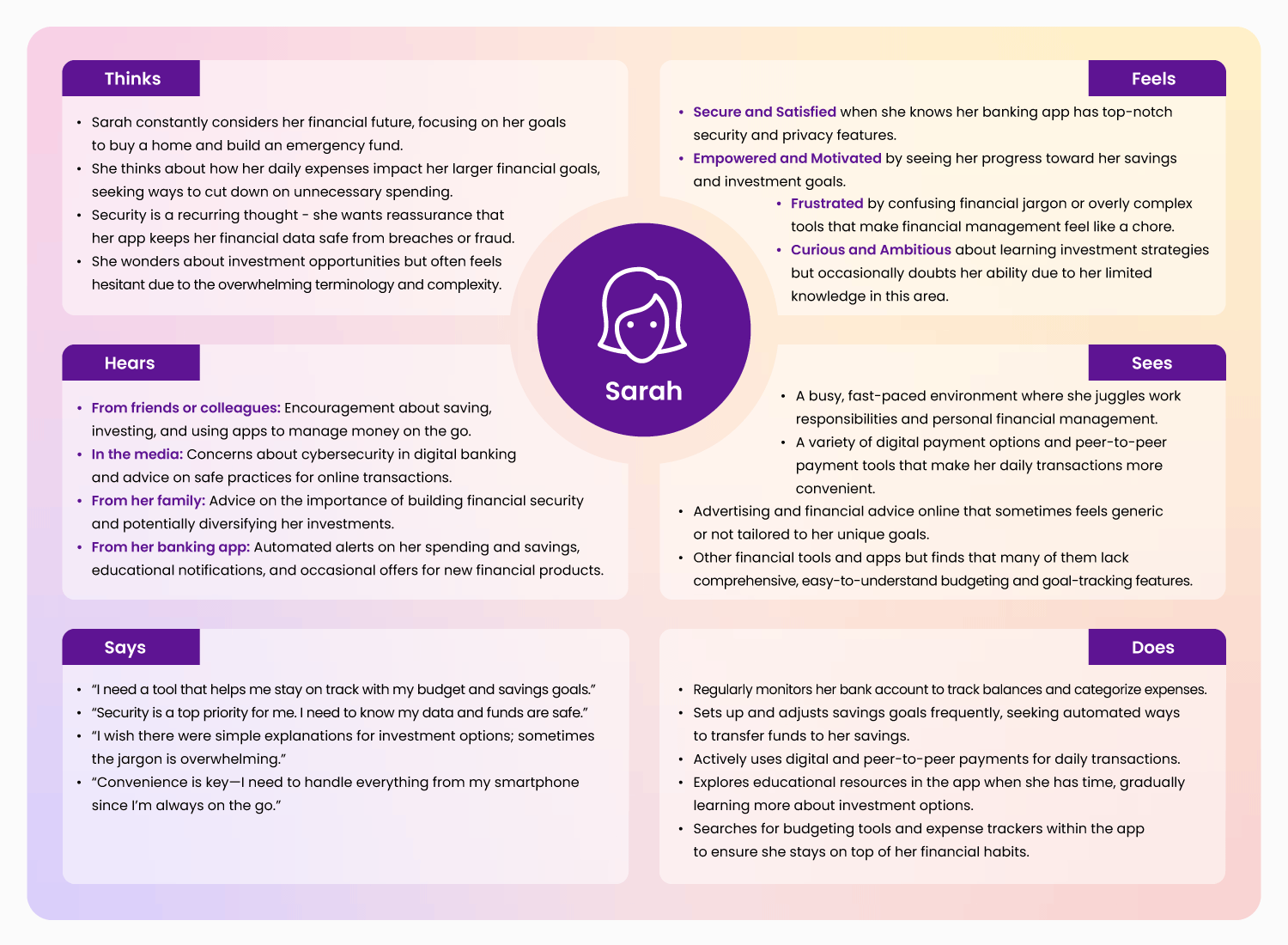
Empathy Map
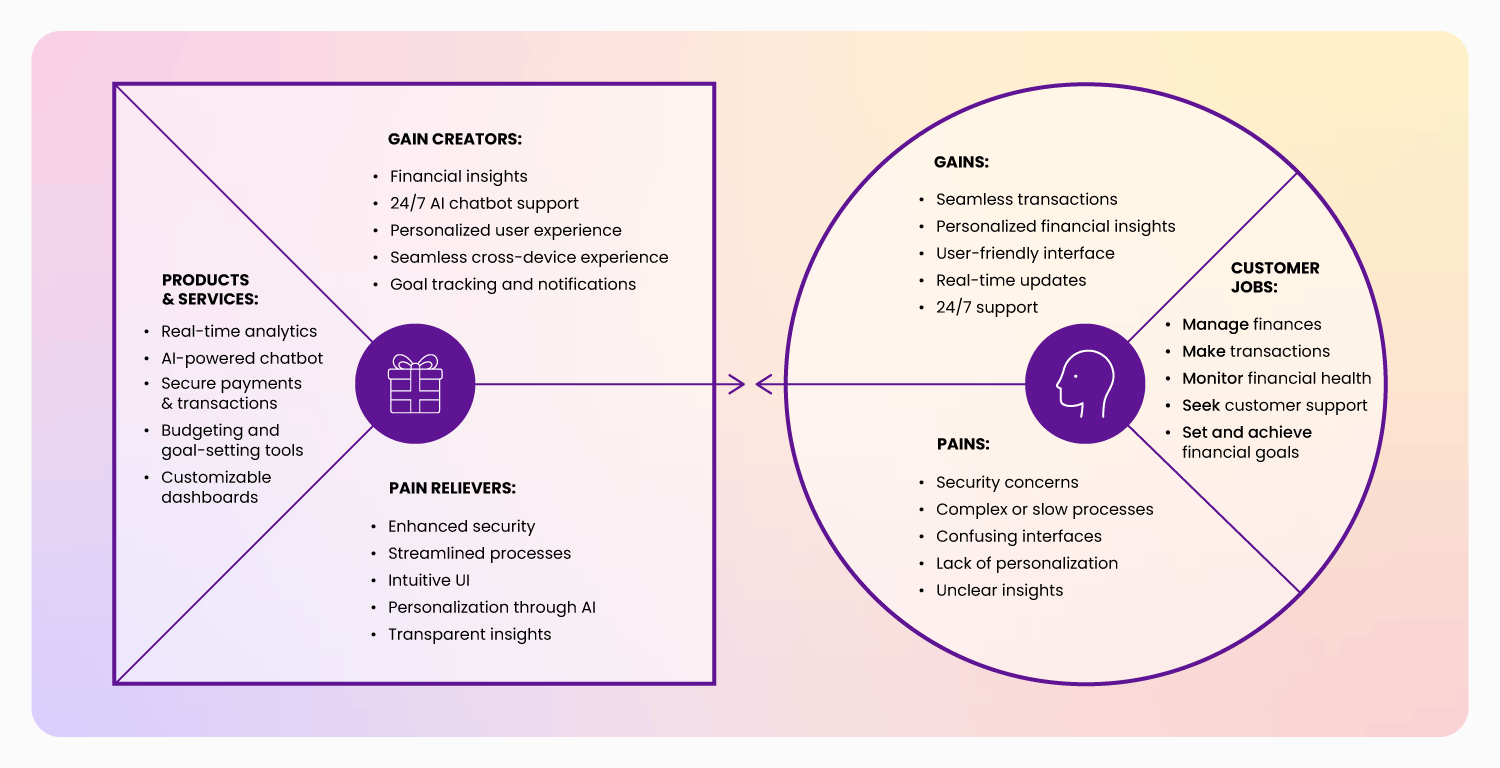
Value Proposition Canvas

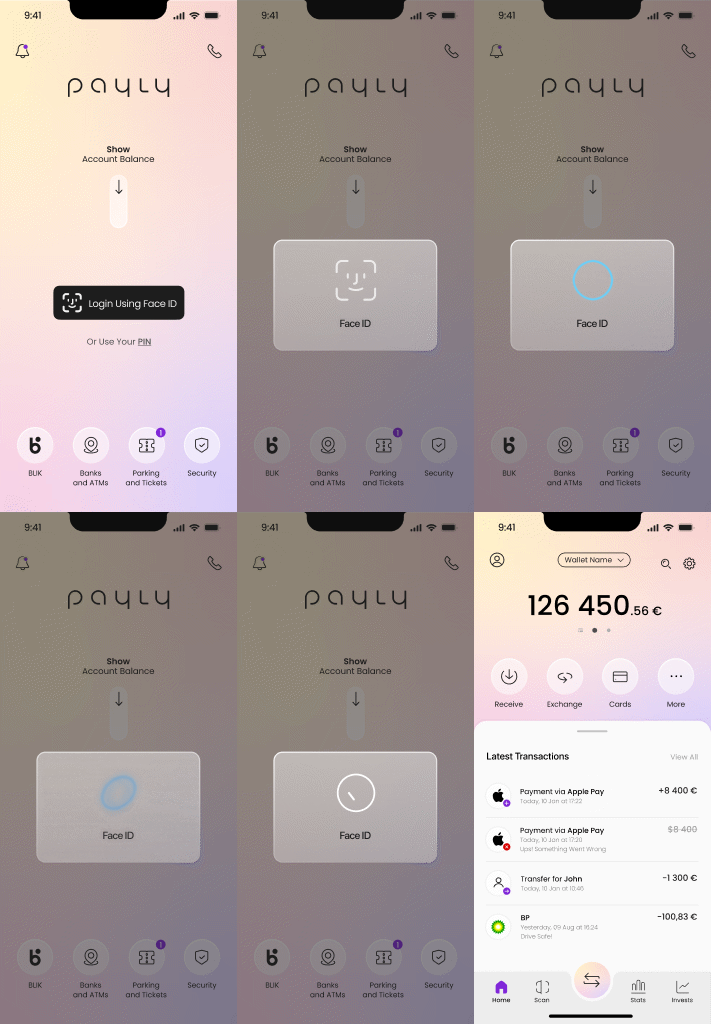
Wireframes
Starting with my initial sketches, I transitioned them into low-fidelity wireframes using Figma. These wireframes reached a stage where they were ready for initial user testing. After gathering feedback from users, I made necessary alterations and proceeded to develop high-fidelity prototypes.


UI Design
I drew inspiration from the best practices:
-
modern and minimalist style
-
light mode
-
high contrasts
-
monochromatic palette accented by the pastel colors
-
prioritized simplicity and accessibility
-
easy to navigate and read
-
pastel gradient background


Low-fidelity


High-fidelity


Usability Testing
Objective
To observe target users as they interact with PAYLY to identify any usability issues related to budgeting, expense tracking, goal-setting, and financial insights.
Participants
-
Six target users took part in individual usability testing sessions.
-
Participants were young professionals with moderate income, focused on saving, budgeting, and using mobile banking for convenience.
Key Findings
-
Budget Setup:
-
Users wanted more flexible and customizable budget categories.
-
-
Feature Navigation:
-
Difficulty in moving seamlessly between budgeting, expense tracking, and goal-setting screens.
-
-
Expense Tracking:
-
Users desired automatic categorization for repeat purchases to save time.
-
-
Financial Insights:
-
Users felt overwhelmed by detailed insights on the main screen and preferred a summarized view.
-

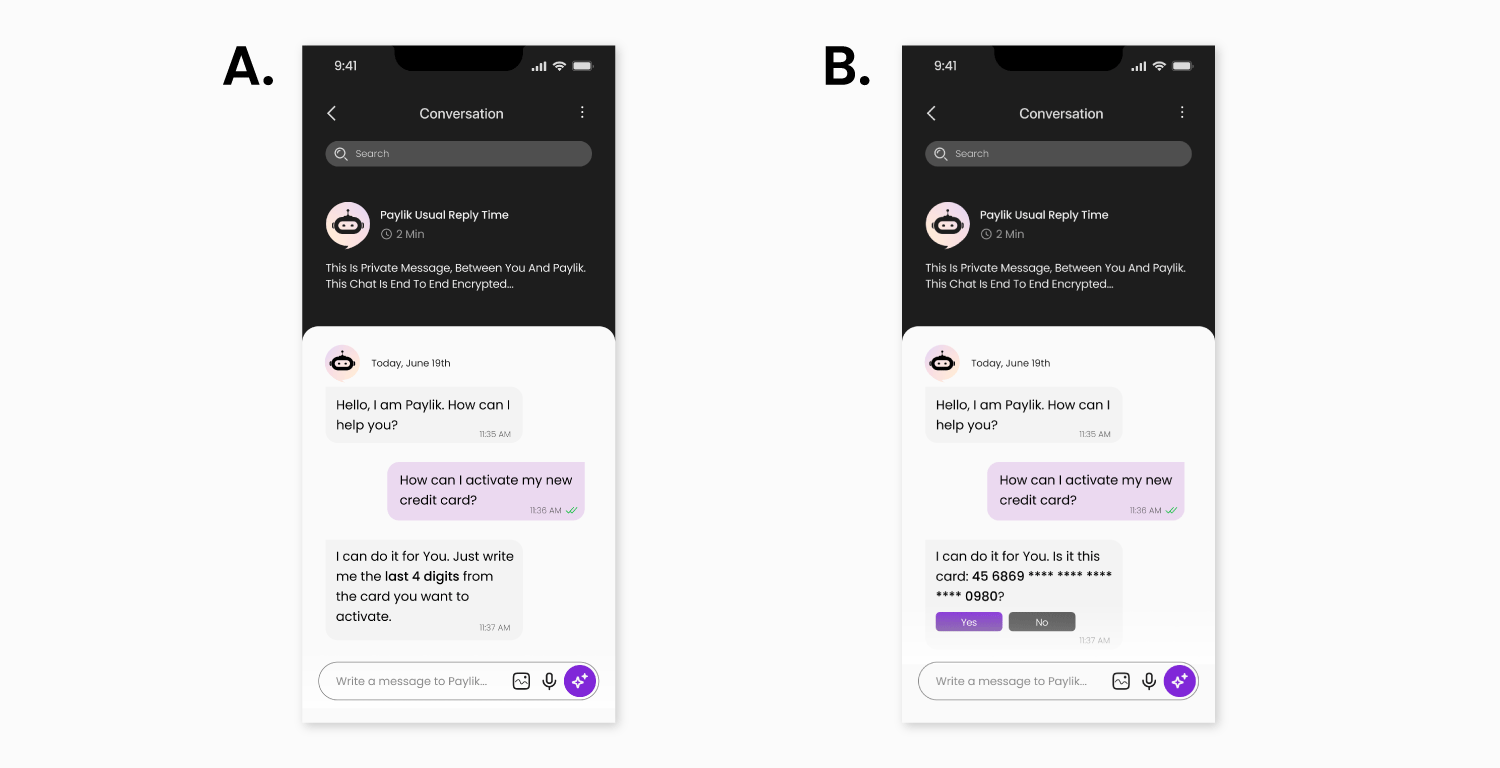
A/B Testing
A/B testing example - AI Chatbot card activation process.

-
Purpose-Built for Modern Financial Needs: PAYLY simplifies budgeting, expense tracking, and goal-setting, aligning with user demand for accessible, mobile-first financial tools.
-
Key Differentiators:
-
24/7 AI-Powered Chatbot: Intelligent chatbot provides instant, personalized support anytime, guiding users through budgeting, expense tracking, and financial goal-setting.
-
Robust Budgeting & Tracking: Real-time expense categorization and budgeting insights help users manage spending effectively.
-
Convenience and Security: Biometric login and two-factor authentication ensure secure, easy access.
-
-
Market Fit & Demand: Meeting users’ needs for security, guidance, and simplicity, PAYLY stands out by resolving common pain points in the market.
-
Stakeholder Benefits:
-
Increased Engagement: Personalized insights and 24/7 chatbot support drive user loyalty.
-
Revenue Growth: Premium features and advisory upsells offer strong monetization opportunities.
-
Competitive Edge: Positioned as an all-in-one solution with top-tier security and AI support.
-
-
Scalable Growth Potential: Built for future expansion into investment and educational features, offering long-term growth for stakeholders.

Project Reflection and Key Learnings
Designing PAYLY has been a rewarding journey in user-centered UX design. Through this project, I focused on creating a seamless, intuitive experience that empowers users to manage their finances confidently. Developing features like the 24/7 AI-powered chatbot and robust budgeting tools highlighted the importance of understanding user needs and translating them into practical, easy-to-use solutions.
Key learnings from this process include:
-
User-Centric Design: Building for real user needs, like simplicity in budgeting and real-time assistance, underscored the value of empathy in UX design.
-
Iterative Testing and Feedback: Usability testing revealed crucial insights, allowing for iterative improvements that enhanced the app’s intuitiveness and overall functionality.
-
Balancing Innovation with Usability: While designing innovative features, I learned to prioritize accessibility and simplicity, ensuring that each feature adds genuine value to the user’s experience.
This project has strengthened my UX skills and my understanding of designing for digital finance products. I’m excited to apply these insights to future design challenges, continuing to create solutions that blend functionality with an excellent user experience.